E-mail: John@xhgraphite.com
WhatsApp: +86-18663987730
E-mail: John@xhgraphite.com
WhatsApp: +86-18663987730

News
Brake particle emissions become a type-approval limit in Europe on 29 November 2026. From that date, new M1 and N1 types must meet a PM10 limit measured over a defined brake cycle: 3 mg/km for battery-electric vehicles and 7 mg/km for every other powertrain. All new vehicles of those categories have to comply one year later, from 29 November 2027.
The limit sits in Regulation (EU) 2024/1257, the Euro 7 regulation adopted on 24 April 2024 and published in the Official Journal on 8 May 2024. It is the first European type-approval rule that treats brake wear as an emission in its own right, alongside exhaust and tyre abrasion.
Annex I, Table 4 sets the first-stage brake values that apply until 31 December 2029. The figure depends on the powertrain, because a battery-electric vehicle relies on regenerative braking for most of its deceleration and therefore wears its friction brakes less.
| Vehicle category | Powertrain | Brake PM10 limit |
|---|---|---|
| M1 and N1, excluding N1 Class III | PEV (battery-electric) | 3 mg/km |
| M1 and N1, excluding N1 Class III | OVC-HEV, NOVC-HEV, ICEV, FCV | 7 mg/km |
| N1 Class III | Separate, higher value | 11 mg/km* |
* The 11 mg/km figure for N1 Class III comes from the European Parliament's summary of the agreed text. Buyers should confirm the final figure against the consolidated Annex I table before writing it into a purchase specification.
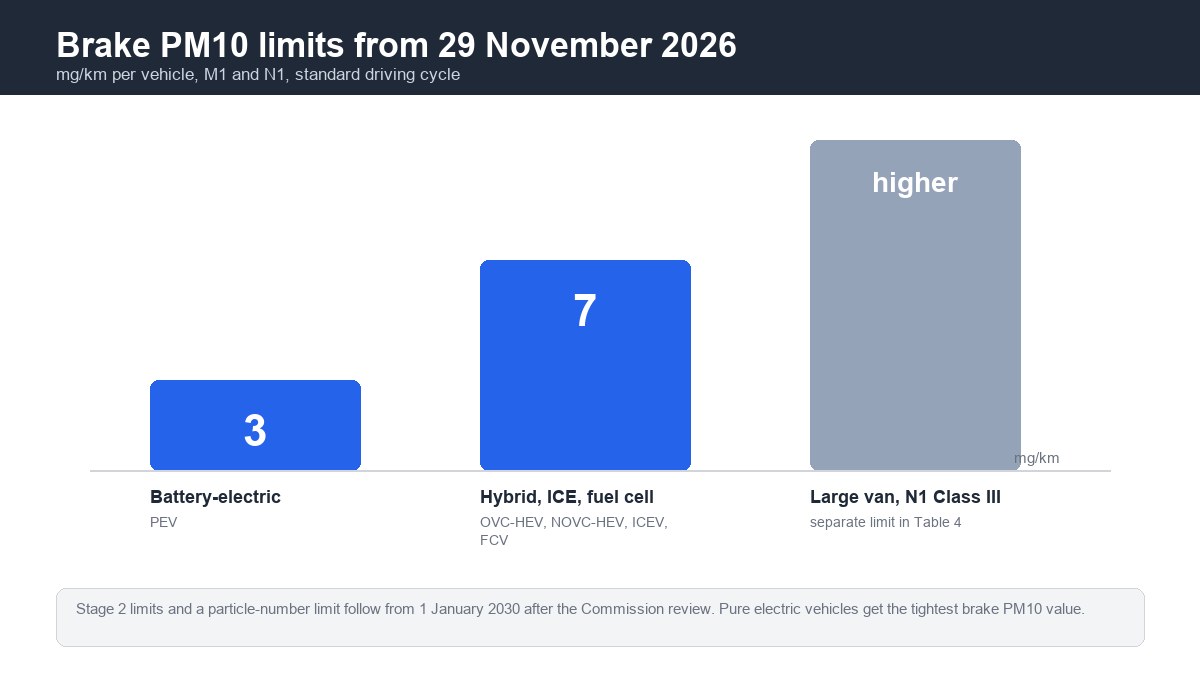
Figure 1. First-stage brake PM10 limits under Annex I, Table 4.
Exhaust emissions have been regulated for decades and have fallen sharply. Non-exhaust sources have not followed the same path. The regulation's own recitals state that tyre and brake emissions are projected to account for around 90 percent of road transport particulate matter by 2050, which is why brake wear moved from a research topic into an approval test.
This matters for the friction industry because the limit is set per vehicle and per kilometre, not per kilogram of pad. No single compound ingredient can be shown to deliver it, and any supplier claiming a material that solves the limit should be asked for the vehicle-level test behind the claim.
The regulation applies in stages. New types come first, then every new vehicle on the market, then the heavy categories.
| Date | What applies |
|---|---|
| 29 November 2026 | New M1 and N1 types must meet the brake limits; approval authorities refuse non-compliant applications |
| 29 November 2027 | All new M1 and N1 vehicles |
| 29 May 2028 | New M2, M3, N2, N3, O3 and O4 types |
| 29 May 2029 | All new vehicles in those heavy categories |
| 1 January 2030 | Second-stage limits, PM10 and particle number, set by delegated act after the Commission review |
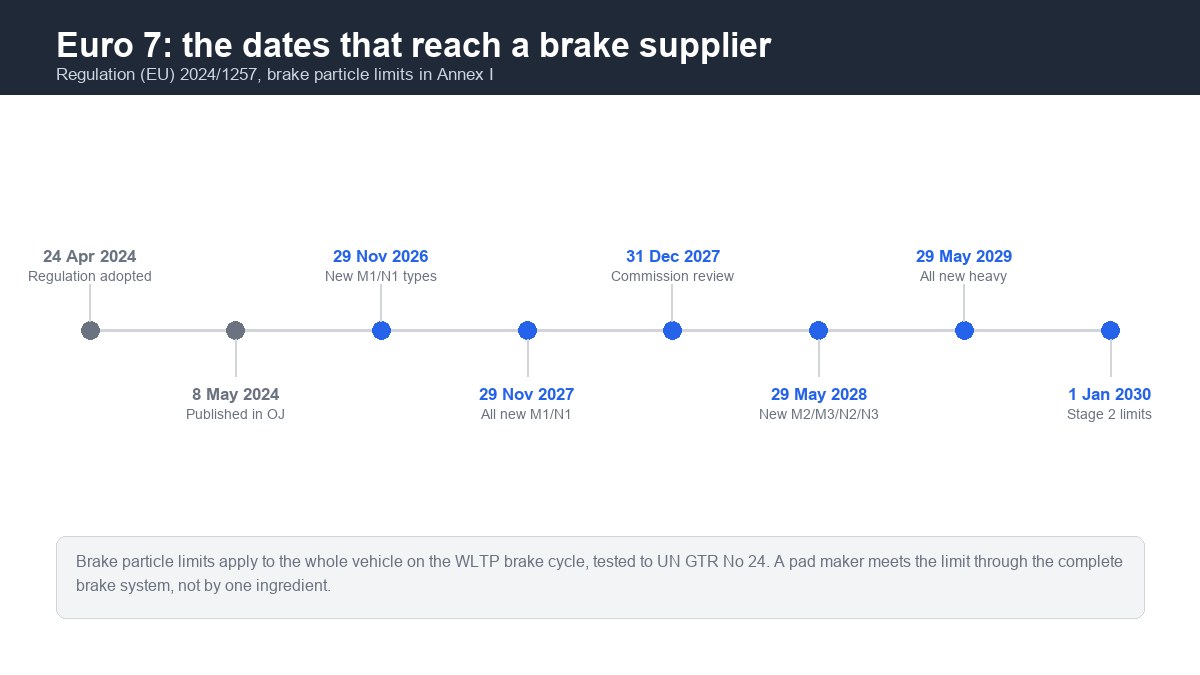
Figure 2. The dates that reach a brake or friction material supplier.
The test procedure is not left to national interpretation. Annex III, Table 4 refers to UN Global Technical Regulation No 24 on brake emissions, and Annex V requires the brake system emissions test to be run in the WLTP brake cycle at type-approval and again at production conformity.
Two details are worth noting. Brake emissions are not part of in-service conformity testing, so the compliance burden falls on the approval file and on the line, not on field monitoring. And the second-stage limits are not fixed yet: Article 18(5) requires the Commission to submit a brake particle report by 31 December 2027, and the values for 2030 are then set through the delegated act procedure.
For a pad maker, the practical change is documentation rather than chemistry. Where a formulation was previously qualified on friction, wear and noise, the approval file now also carries a particle result measured on a vehicle over a defined cycle.
Expect customers to ask for material data that supports the system-level test, including lot-to-lot consistency, since a limit measured per vehicle still depends on repeatable pad behaviour.
Expect earlier involvement of the raw material supplier in formulation work, because a change that alters transfer film behaviour now has an approval consequence.
Expect the second stage to tighten the target while the test method stays the same, which rewards formulations that are already stable rather than ones tuned to a single point.
Our own technical note on graphite grades for friction materials sets out the four data sheet fields that a formulator should control first. The friction and sealing page covers the grades we supply for this application.
Three dates to track from here: 31 December 2027, when the Commission's brake particle report is due; 1 January 2030, when the second-stage values take effect; and the delegated act that will publish those values, which is the point at which a formulation target can be set with confidence.
Until then, the first-stage limits are the operating requirement. Suppliers who can show a consistent flake grade with a documented distribution and a narrow carbon range are in a better position to support a customer's approval file than suppliers who quote a single headline figure. The purchase specification guide explains how those values are documented.
Sources: Regulation (EU) 2024/1257, published in the Official Journal on 8 May 2024, and its Annexes I, III and V (EUR-Lex, CELEX 32024R1257). The N1 Class III value is taken from the European Parliament's summary of the agreed text and should be verified against the consolidated annex before use in a specification. Prepared by Qingdao XingHe Graphite Co., Ltd., 16 November 2026.
Online Message
Leading the Graphite Industry with Innovation and Expertise.
Ma GeZhuang Graphite Mine, Pingdu, QingDao, China
Copyright © 2026 QingDao XingHe Graphite Co.,Ltd. All Rights Reserved.